

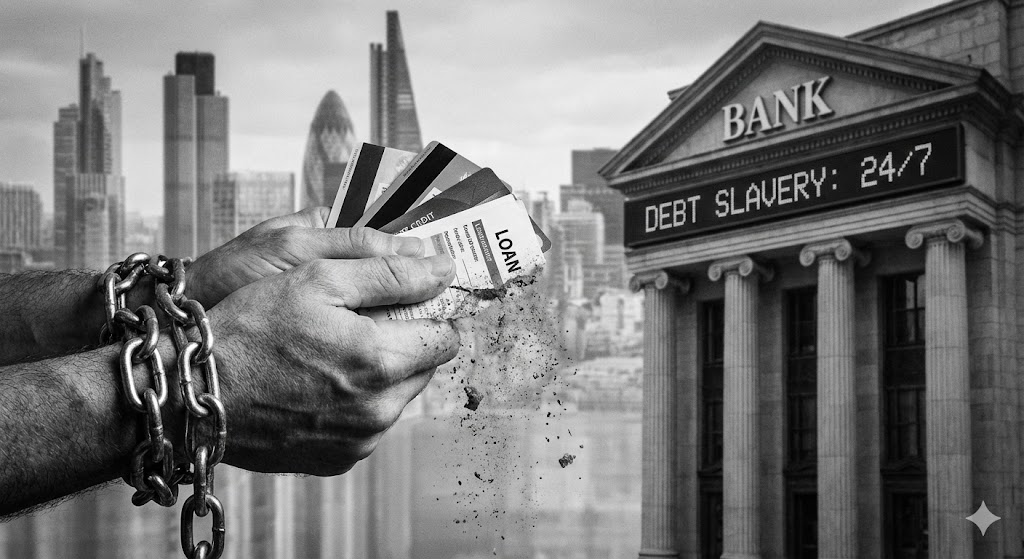
You are normalizing your own slavery.
You look around at your friends, your neighbors, and your colleagues in this modern society, and you see everyone driving financed cars, living in mortgaged homes, and swiping credit cards for holidays they cannot afford. You tell yourself, “It’s not uncommon to have some form of debt”. You use this statistic as a security blanket to comfort yourself while you sleepwalk toward financial ruin.
You are wrong. Just because a disease is common does not mean it isn’t killing you.
Whether it is credit card debt, a personal loan, student tuition, or car finance, you are voluntarily handing over your future freedom to a bank. The good news is that you can escape, but it requires a complete lobotomy of your spending habits. It comes down to three things: whether the debt makes you money, your management skills, and your preparation for disaster.
It is time to stop managing your debt like a hobby and start managing it like a war.
The “Good Debt” Lie You Tell Yourself to Sleep at Night
You love to justify your bad decisions by calling them “investments.” You buy a car on finance and convince yourself it’s necessary for work. You max out a credit card for a wardrobe upgrade and call it “personal branding.”
Wake up. While all debt costs money and needs to be repaid, not all debt is equal. There is a distinct line between “good debt” and “bad debt,” and the difference is simply the ability of that debt to build wealth.
- The Asset Class (Good Debt): This is debt used to invest in an asset like property or shares. This is acceptable only because it may generate income or grow in value, allowing you to sell it for a profit later. It is a calculated risk.
- The Consumption Trap (Bad Debt): This is money you borrow for things that will never achieve a financial gain. Day-to-day expenses, groceries, clothes, and holidays.
If you are borrowing money to buy groceries or a plane ticket, you are not “managing cash flow.” You are insolvent. You are burning tomorrow’s labor to pay for today’s pleasure.
Perform a Financial Autopsy on Your Disgusting Habits
You cannot fight an enemy you refuse to look at. If you want to improve your debt management skills, you need to stop hiding from your bank statements.
1. The List of Shame You need to work out exactly what debts you have. A good starting point is to make a list of how much you owe, to which providers, and the fees and interest attached to each. Yes, this will be a “slightly unpleasant wakeup call”. Good. It should be unpleasant. It will give you a clear view of where you are at. You need to see exactly how those interest rates are eating your income alive.
2. The Cash Flow Interrogation It is not enough to know what you owe; you must know what you are bleeding. Compare what you earn, what you owe, and what you spend. You need to know exactly how much cash is required for essentials versus where the rest of your money is being wasted. This audit will reveal where you can extract extra cash to add to your repayments. Use a budget calculator if you are too lazy to do the math yourself.
Stop Bleeding from a Thousand Cuts (Consolidation is Triage, Not a Cure)
You are likely juggling multiple loans, each with its own parasitic fees. Multiple debts mean multiple interest charges. It is time to simplify the battlefield.
Consolidating your debts into a single loan with a lower rate could help you save money. If you roll your loans into one, it becomes easier to manage because you only make one repayment.
But here is the warning: Do not be an idiot. Before you sign anything, check if the lender is licensed by a certified financial regulator. You must factor in interest rates, fees, and additional charges to see if you are actually saving money. And remember: if you consolidate but fail to make repayments on time, you will end up paying more. Consolidation is not a free pass; it is a tactical retreat to regroup.
The “Minimum Payment” Trap is Designed for Suckers
Banks love customers who pay the minimum. They are the cash cows. When you make a repayment, you have two options: pay the full amount or the minimum owing.
It is tempting to only pay the minimum. It leaves more cash in your pocket for the weekend, right? Wrong. If you do this, you still incur interest on the leftover balance. This means you end up owing more money in the long run.
You must pay the full amount outstanding. If you pay the full amount, typically you won’t be charged any interest at all. Stop tipping the bank. Pay the bill.
Kill the Monster Faster or It Will Eat You
Time is your enemy. The longer you hold debt, the more it grows. You need to look at whether you can afford to make extra repayments.
Every dollar you pay on top of your regular repayment helps you pay off what you owe at a faster rate. This results in paying less interest, which could save you thousands of dollars. However, check the fine print. Some predatory lenders charge you for paying off debt early. Avoid them.
Also, stop being loyal to your bank. High interest rates affect how much you pay back. Shop around for a better deal. Use comparison websites to do the legwork. If you aren’t negotiating, you are losing.
The Bankruptcy of Your Future (Prepare for the Crash)
You think your job is safe? You think your health is guaranteed? Expecting the unexpected is the only strategy that works. Loan providers can increase rates. You could lose your job or suffer health issues. These events prevent you from making repayments.
You need a contingency plan, specifically an emergency savings fund. Without this buffer, one bad week will force you to miss repayments or accumulate even more debt just to survive.
The Kill Shot
Debt is not a lifestyle choice; it is a financial emergency.
You have two choices:
- The Victim: Continue to pay minimums, complain about the cost of living, and let interest rates eat your future.
- The Master: Audit your spending, consolidate your liabilities, pay the full balance every month, and build a fortress of savings.
If you are drowning, reach out. But do not expect a lifeguard to save you if you refuse to stop swimming toward the deep end.
Cut the cards. Pay the balance. Buy your freedom back.
Leave a Reply